

Hydroxyproline (Hyp): Gold-Standard Collagen Biomarker — Cloud-Clone ELISA Accurate Detection
Overcoming analytical hurdles for measuring labile hydroxyproline in fibrosis, tissue-repair and dermatological research
HUSTON, TX, UNITED STATES, September 16, 2026 /EINPresswire.com/ -- Collagen remodelling underpins numerous physiological and pathological processes ranging from skin ageing and wound healing to organ fibrosis and joint degeneration. As a unique amino acid intrinsic to collagen, hydroxyproline (Hyp) serves as the globally-accepted gold-standard biomarker for assessing collagen synthesis, deposition and breakdown. However, Hyp’s chemical lability and interference from structurally similar amino acids create major analytical challenges. This press release illustrates how Cloud-Clone’s optimized Hyp ELISA kit addresses these testing pain-points and delivers consistent quantitative data to advance global life-science and biomedical investigations.
Biological Background and Core Research Value of Hydroxyproline (Hyp)
Skin laxity, impaired wound healing, joint crepitus, organ fibrosis and hypertrophic scars are all closely linked to shifts in collagen metabolism. Hydroxyproline (Hyp) acts as the exclusive molecular readout for collagen synthesis, degradation and pathological accumulation.
As a signature amino acid almost unique to collagen, Hyp delivers exceptional specificity and has been recognized worldwide as the gold-standard biomarker of collagen turnover. Precise Hyp quantification represents an essential experimental step for exploring mechanisms of tissue injury and ageing, as well as evaluating therapeutic candidates for tissue repair, anti-ageing and anti-fibrotic interventions.
Hyp serves as a direct reflection of in-vivo collagen synthesis, deposition and degradation. Pathologies including skin ageing, hypertrophic scars, cartilage degeneration, hepatic, pulmonary and myocardial fibrosis all arise from disrupted collagen homeostasis, featuring either abnormal collagen accumulation or excessive collagen loss. Changes in Hyp concentrations provide intuitive and precise insights into connective-tissue remodelling and disease severity, making Hyp one of the most widely-accepted core detection targets for tissue repair, anti-ageing, fibrosis mechanistic research and osteoarticular studies.
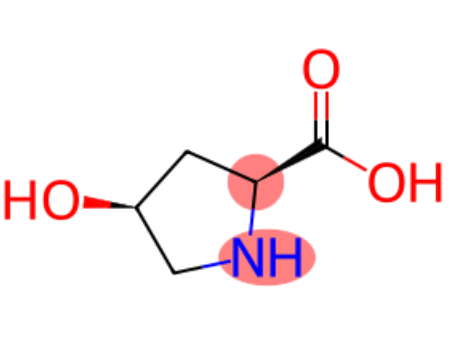
(Figure 1: Molecular structure of hydroxyproline (Hyp))
Regarding biosynthesis, distribution and metabolic pathways, hydroxyproline is not directly encoded by genes. Its formation proceeds in two major steps. First, cells synthesize procollagen peptide chains using proline as a precursor. Within the endoplasmic reticulum, prolyl 4-hydroxylase works together with ascorbic acid (vitamin C) and ferric ions to hydroxylate selected proline residues along the peptide backbone. Modified procollagen undergoes further processing and cross-linking to assemble mature collagen, which is distributed throughout connective tissues including skin, tendons, ligaments, articular cartilage, organ interstitium and vascular walls.
During tissue remodelling, injury or degeneration, collagen fibres are gradually degraded by collagenases and matrix metalloproteinases. Peptide cleavage releases free hydroxyproline. Part of free Hyp is re-taken up and recycled by local tissue cells, while the majority enters systemic circulation and is ultimately filtered by the kidneys and excreted in urine. Under physiological conditions, collagen synthesis and degradation remain dynamically balanced, maintaining stable Hyp concentrations in blood, tissues and urine. Chronic injury, sustained inflammation, progressive fibrosis, severe trauma or ageing disrupt this equilibrium and trigger significant increases or decreases in Hyp levels, which act as direct indicators of pathological severity.
From an analytical perspective, hydroxyproline is a small polar water-soluble amino acid with moderate chemical stability. Prolonged room-temperature storage, light exposure, repeated freeze-thaw cycles and pH fluctuations can trigger Hyp decomposition and produce artificially low measurements. Biological specimens contain proline, glycine, other free amino acids and small peptides with similar physicochemical properties that generate substantial homologous interference. Common test matrices include serum, plasma, tissue homogenates, urine, cell-culture medium, skin and tendon extracts. These samples are rich in miscellaneous proteins, lipids, inorganic salts and enzymes, which promote non-specific binding and increase technical difficulties for accurate Hyp quantification.
Altered hydroxyproline concentrations correlate with diverse disease states and physiological conditions across multiple disciplines. In organ-fibrosis research, chronic injury to the liver, lung, kidney or myocardium activates fibroblasts and drives excessive collagen deposition. Hyp levels in tissues and serum rise significantly and correlate positively with fibrotic progression and disease staging, establishing Hyp as a classic marker for hepatic, pulmonary, myocardial and renal fibrosis. In tissue-injury and scar-related studies, Hyp rises transiently during ordered collagen proliferation following trauma or surgical wounding. Persistently elevated Hyp occurs in keloids and hypertrophic scars caused by pathological collagen over-accumulation, enabling researchers to distinguish physiological repair from pathological scarring. Within osteoarticular and sports-medicine research, cartilage, tendon and ligament damage as well as degenerative arthritis and osteoporosis cause collagen loss and structural deterioration accompanied by reduced local Hyp concentrations, supporting assessments of sports-injury severity, joint degeneration and therapeutic repair outcomes. For dermatological science, dermal collagen loss induced by skin ageing and photodamage lowers Hyp content, rendering Hyp a key endpoint for evaluating skin senescence, barrier impairment and the efficacy of anti-ageing bioactive substances. Hyp is also widely measured in nutritional-metabolism research, studies on collagen-containing functional foods and medical biomaterial assessment to evaluate raw-material quality and in-vivo bioavailability.
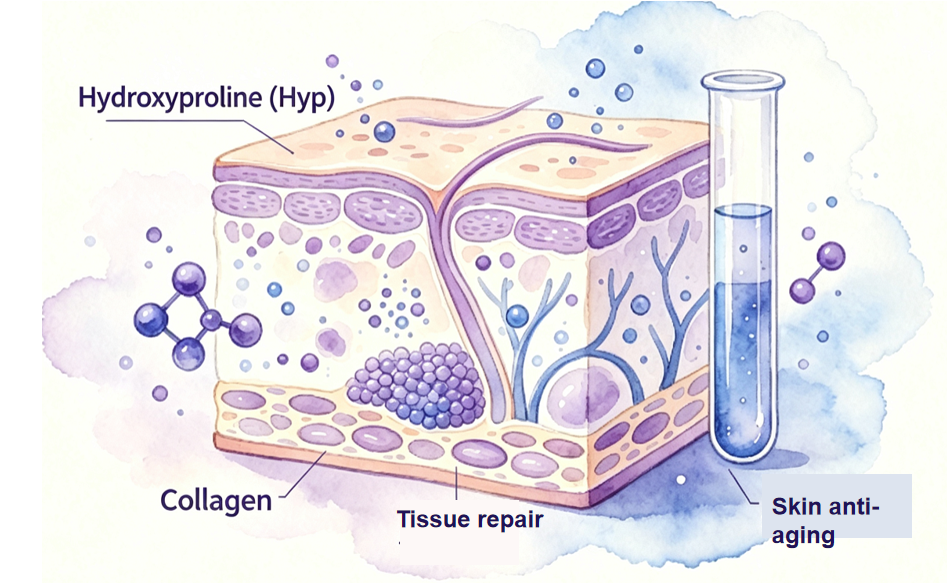
(Figure 2: Schematic illustration of hydroxyproline (Hyp) in tissue repair and skin anti-ageing research)
At present, hydroxyproline (Hyp) represents an indispensable biomarker for fibrosis-mechanism dissection, tissue-injury model construction, scar-pathology research, osteoarticular-degeneration studies, skin-ageing investigations and high-throughput screening of functional bioactive agents. Whether conducting in-vitro fibroblast-culture assays, establishing in-vivo animal injury and fibrosis models, or assessing anti-fibrotic, pro-repair, anti-ageing and joint-protective drugs and natural products, accurate quantification of Hyp concentrations and evaluation of collagen synthesis-degradation balance constitute a fundamental prerequisite for experiment execution, mechanistic interpretation and academic publication.
Comparison of Mainstream Detection Technologies and Core Experimental Bottlenecks for Hyp Assays
As a small modified amino acid susceptible to decomposition and subject to interference from homologous amino-acid species and complex sample matrices, Hyp can be quantified by multiple established analytical workflows. These methods show large disparities regarding sensitivity, specificity, operational complexity, sample throughput and overall cost. Based on extensive hands-on laboratory experience, mainstream techniques are compared and common experimental pain-points summarized below.
Performance Comparison of Four Mainstream Detection Technologies
1.High-Performance Liquid Chromatography (HPLC) HPLC constitutes a traditional reference-grade analytical approach for amino-acid measurement. Chromatographic columns separate hydroxyproline from ordinary amino acids and small peptides, followed by ultraviolet or fluorescence detection; most workflows require pre-column derivatization to enhance signal intensity and separation performance. HPLC delivers good resolution, high quantitative accuracy and stable reproducibility, enabling simultaneous discrimination of multiple amino-acid components. Nevertheless, high instrument procurement and maintenance costs, labour-intensive sample pre-treatment including deproteinization, hydrolysis, extraction, derivatization and filtration, long assay durations and low sample throughput restrict HPLC primarily to validation of a small number of critical samples and reference-standard calibration. It cannot meet requirements for large-scale animal experiments or high-throughput drug-screening workflows.
2.Liquid Chromatography-Tandem Mass Spectrometry (LC-MS/MS) LC-MS/MS delivers the highest-precision analytical performance for Hyp detection. It combines powerful chromatographic separation with mass-spectrometric specific identification to reliably differentiate Hyp from structurally similar proline and peptide fragments. Outstanding anti-matrix-interference capacity permits trace-level accurate quantification and generates highly authoritative data widely used for high-impact publication evidence, reference-material traceability and complex-sample deep analysis. However, high equipment expenses, complicated maintenance routines, strict operator-skill requirements and low throughput prevent routine deployment in most standard-research laboratories.
3.Conventional Biochemical Colorimetric Assays Colorimetric assays rely on characteristic colour-forming chemical reactions specific to hydroxyproline. Instruments are widely accessible, operation is straightforward and reagent costs remain low, making this method popular in early-stage laboratories. Still, intrinsic poor specificity represents a major limitation. Reducing substances, miscellaneous peptides and other amino acids within samples interfere with colour development, resulting in weak anti-interference performance, unsatisfactory reproducibility and low quantitative precision. Colorimetric workflows are only suitable for rough qualitative or broad preliminary screening and fail to satisfy data-quality standards required for academic publications. Cumbersome multi-step workflows involving hydrolysis, oxidation and colour-development also carry low fault tolerance and frequently lead to experimental failure.
4.Enzyme-Linked Immunosorbent Assay (ELISA) ELISA stands as the preferred mainstream detection solution for basic-science research. Readily performed with standard laboratory microplate readers without large precision analytical instruments. Sample pre-treatment is greatly simplified, removing complicated hydrolysis, derivatization and chromatographic steps. The technique features low operational barriers, high sample throughput and favourable overall cost-efficiency. ELISA is fully compatible with serum, tissue homogenates, urine, cell-culture supernatants and other biological matrices and is extensively applied for animal modelling, cellular intervention, gradient drug screening and large-sample statistical analysis. Even so, commercially-available generic Hyp ELISA kits present notable shortcomings: the absence of anti-decomposition buffer systems allows Hyp degradation and underestimation of analyte levels; insufficient antibody specificity causes cross-reactivity triggered by proline and small collagen peptides; inadequate sensitivity fails to capture subtle Hyp shifts during early-stage disease or mild pharmacological intervention. These drawbacks commonly produce distorted data, non-significant inter-group differences and poor replicate reproducibility.
Four Major Experimental Challenges in Hyp Quantification
Practical laboratory work identifies four core pain-points responsible for measurement bias, large replicate deviations and insufficient inter-group discrimination during hydroxyproline quantification:
1.Ex-vivo decomposition and analyte loss: Hyp exhibits limited chemical stability. Ambient-temperature incubation, light exposure and repeated freeze-thaw cycles accelerate its breakdown after sample collection. Conventional buffer systems provide insufficient protection and yield measured values lower than true biological concentrations.
2.Cross-interference from homologous substances: Proline, free amino acids and small collagen-derived peptides are abundant in biological samples and share similar physicochemical properties with Hyp. Conventional assays struggle to achieve precise differentiation, triggering cross-reactions, false-positive signals and measurement deviation.
3.Difficulty detecting minor concentration changes: Only subtle Hyp fluctuations occur during early-stage pathological progression, mild tissue injury or gentle pharmacological intervention. Insufficient kit sensitivity prevents detection of biologically meaningful inter-group differences and yields statistically non-significant experimental outputs.
4.Complex sample-matrix composition: Tissue homogenates, serum and urine contain abundant miscellaneous proteins, lipids, enzymes and suspended impurities, which induce non-specific binding within reaction systems, amplify data dispersion and severely compromise assay reproducibility.
Distinct Technical Advantages of Cloud-Clone Hydroxyproline (Hyp) ELISA Kit
Targeting widespread industry-level obstacles including Hyp decomposition, cross-interference from homologous amino acids, trace-level analyte abundance and complex sample matrices, Cloud-Clone draws upon accumulated expertise in small-molecule amino-acid recognition, sample-stabilization technology and competitive-mode ELISA manufacturing. The independently-developed high-quality Hydroxyproline (Hyp) ELISA Kit (Cat.No. CEA621Ge) implements multi-dimensional upgrades covering specific molecular recognition, anti-degradation buffer formulation, signal amplification and anti-interference components. It resolves diverse experimental bottlenecks at the source and satisfies detection requirements across fibrosis research, tissue-repair science, dermatology and sports-medicine disciplines.
Core Research Application Scenarios
Benefiting from high specificity, robust stability, superior sensitivity, powerful anti-interference performance and user-friendly workflows, Cloud-Clone Hydroxyproline (Hyp) ELISA Kit is widely deployed across pathology, pharmacology, dermatological science, sports medicine and biomaterial-research disciplines.
1. Mechanistic research on organ fibrosis
Animal and cellular activation models for hepatic, pulmonary, myocardial and renal interstitial fibrosis are established. Hyp concentrations in tissues and serum are quantified and analysed together with fibrosis-related signalling markers to dissect causal links between aberrant collagen deposition and fibrotic disease onset and progression. This supports identification of pathological mechanisms and potential therapeutic targets and accelerates anti-fibrotic drug development.
2. Tissue-injury and pathological-scar research
Using injury models including cutaneous trauma, surgical wounds and burn wounds, dynamic Hyp profiling evaluates collagen-remodelling kinetics and wound-healing status. In hypertrophic-scar and keloid models, elevated Hyp levels are quantified to explore pathological mechanisms driving excessive collagen proliferation and generate supporting data for scar-intervention and repair-oriented drug research.
3. Osteoarticular and sports-medicine research
Animal models for degenerative arthritis, tendon-ligament injury and osteoporosis are applied to measure Hyp within articular-cartilage, tendon and serum specimens. Researchers analyse correlations between collagen loss and joint degeneration or sports-related trauma and assess pharmacological performance of joint-protective and connective-tissue-strengthening bioactive agents.
4. Skin ageing and skin-repair research
Models for photo-ageing, chronological skin ageing and skin-barrier impairment are constructed. Hyp abundance within skin tissue is quantified to characterize dermal-collagen-loss patterns. The kit supports efficacy evaluation for anti-ageing, skin-repairing and moisturizing bioactive ingredients and cosmetic raw materials and represents a well-established detection solution for dermatological research.
5. Targeted-drug and natural-product screening plus efficacy assessment
Enables high-throughput screening and pharmacological evaluation for chemical agents, herbal monomers and compound formulations targeting anti-fibrosis, wound repair, scar inhibition, joint protection and skin anti-ageing. Quantification of Hyp-level changes evaluates how candidate compounds modulate collagen synthesis and degradation, assisting target identification and optimal dosing-regimen determination.
6. Biomaterial and functional-product research
For collagen-based medical materials, tissue-engineering scaffolds and collagen-containing functional-food studies, Hyp originating from material degradation or animal-in-vivo samples is quantified to assess biomaterial biocompatibility, degradation profiles and functional-product bioavailability.
Conclusion
Hydroxyproline (Hyp) is a collagen-specific signature amino acid and the gold-standard biomarker of collagen metabolism. It participates in pathological cascades of organ fibrosis, tissue injury, scar formation, joint degeneration and skin ageing and constitutes an irreplaceable core readout for connective-tissue-oriented investigations.
As a small-molecule amino acid prone to decomposition, Hyp measurement faces multiple technical obstacles: poor ex-vivo stability, severe interference from homologous amino-acid species, complex sample matrices and difficulty detecting subtle concentration shifts. Traditional liquid-chromatography and mass-spectrometry workflows carry high entry barriers, low throughput and substantial operating costs. Conventional colorimetric assays lack sufficient specificity and precision. None of these approaches are well-suited for routine large-batch-mode research work. Generic ELISA kits frequently suffer inadequate stability and specificity and readily produce distorted experimental data that delays research progress. Cloud-Clone Hydroxyproline (Hyp) ELISA Kit systematically resolves Hyp-detection bottlenecks by integrating high-performance specific-recognition reagents, proprietary anti-decomposition buffer formulations, high-sensitivity signal-amplification modules, multi-dimensional anti-matrix-interference components and standardized operating workflows.
Covering fibrosis investigations, tissue-repair studies, scar-pathology research, osteoarticular-degeneration projects, skin-ageing research, drug-screening programmes and biomaterial development, this kit delivers accurate, stable and reproducible quantitative data to support investigators in advancing research programmes and producing high-quality academic outputs. Cloud-Clone will keep deepening its portfolio of detection assays for collagen-related biomarkers, amino acids and inflammatory mediators. Reagent performance will be continuously optimized and research-reagent portfolios expanded to empower global basic and translational biomedical research.
Press Release Closing Statement For investigators exploring connective-tissue remodelling, organ fibrosis, wound repair, joint pathology, skin ageing and biomaterial development seeking reliable hydroxyproline quantification tools, Cloud-Clone provides ready-to-use ELISA kits alongside comprehensive technical support. Further product specifications and technical enquiries are accessible through official global communication channels.
About Cloud-Clone Corp.
Cloud-Clone Corp. is dedicated to the development and production of high-quality immunoassay reagents and detection solutions. With a focus on antibody engineering, multiplex assay development, and cross-platform compatibility, the company provides research tools designed to support precision medicine and advanced biomedical investigation globally. Our core products and services include the research and development of proteins, antibodies, ELISA kits, primary cells, and multiplex cytokine assay kits, as well as professional CRO services to fully meet the diverse needs of biomedical research and related fields.
For more information about Cloud-Clone Corp, visit www.cloud-clone.com.
CLOUD-CLONE CORP.(CCC)
Tel: 001-832-538-0970, 0086-27-8425-9552
Email: mail@cloud-clone.com, sales@cloud-clone.us
Visit us on social media:
LinkedIn: https://www.linkedin.com/company/cloud-clone-corp/
Instagram: https://www.instagram.com/cloudclonecorp2023/
TickTok: https://www.tiktok.com/@cloudclonecorp2026
SuKi Duan
CLOUD-CLONE CORP.WUHAN
email us here
Visit us on social media:
LinkedIn
Instagram
TikTok
X
Legal Disclaimer:
EIN Presswire provides this news content "as is" without warranty of any kind. We do not accept any responsibility or liability for the accuracy, content, images, videos, licenses, completeness, legality, or reliability of the information contained in this article. If you have any complaints or copyright issues related to this article, kindly contact the author above.
