

New-Type NdFeB Composite SERS Substrate: Gradient Magnetic Field Regulates Hot Spot Enhancement of Raman Signal
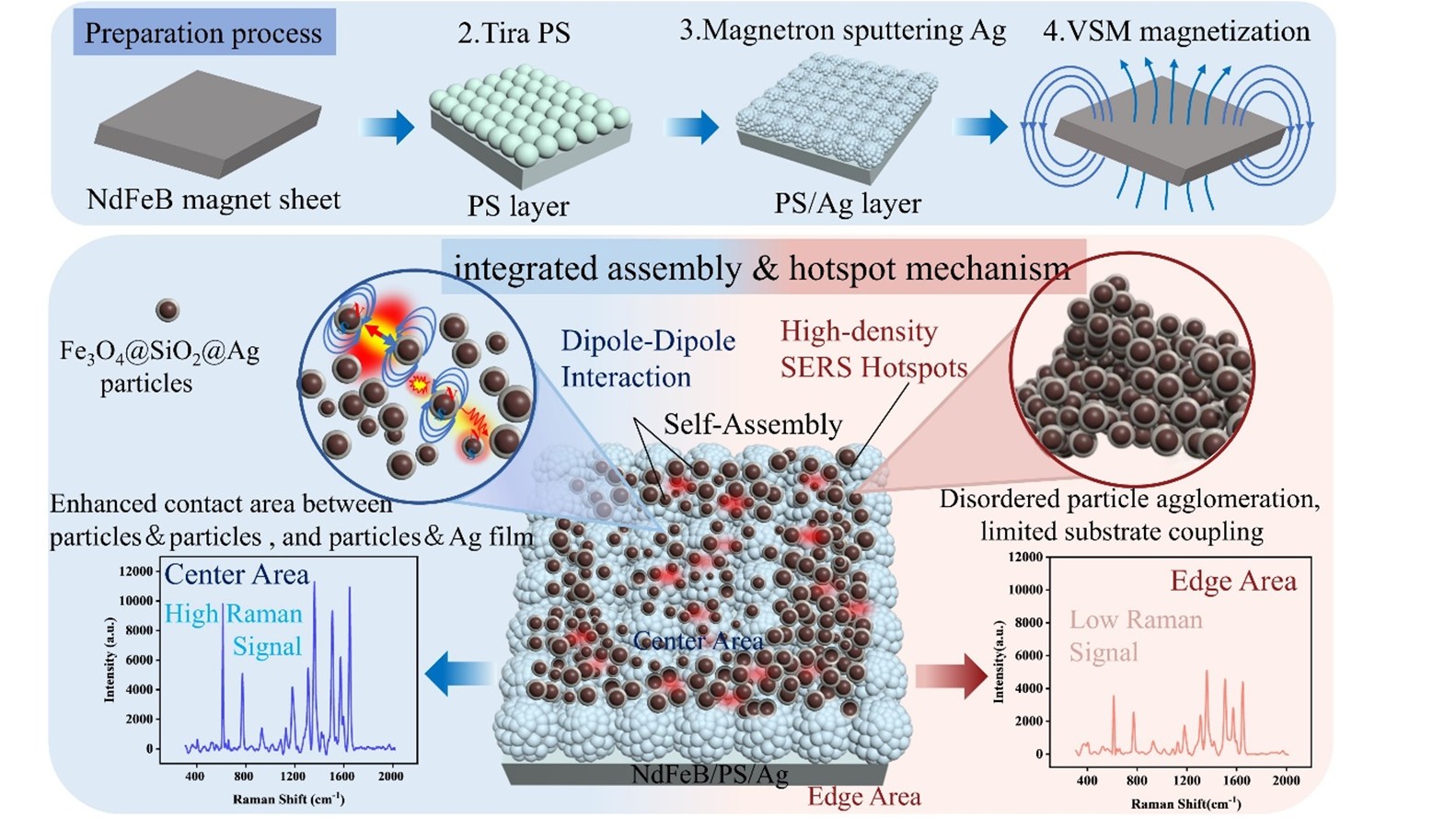
Researchers propose a magnetic-field-controlled composite SERS substrate strategy, through regulating the spatial distribution of the target molecule carriers, to realize its coupling with the plasmon hot spot.
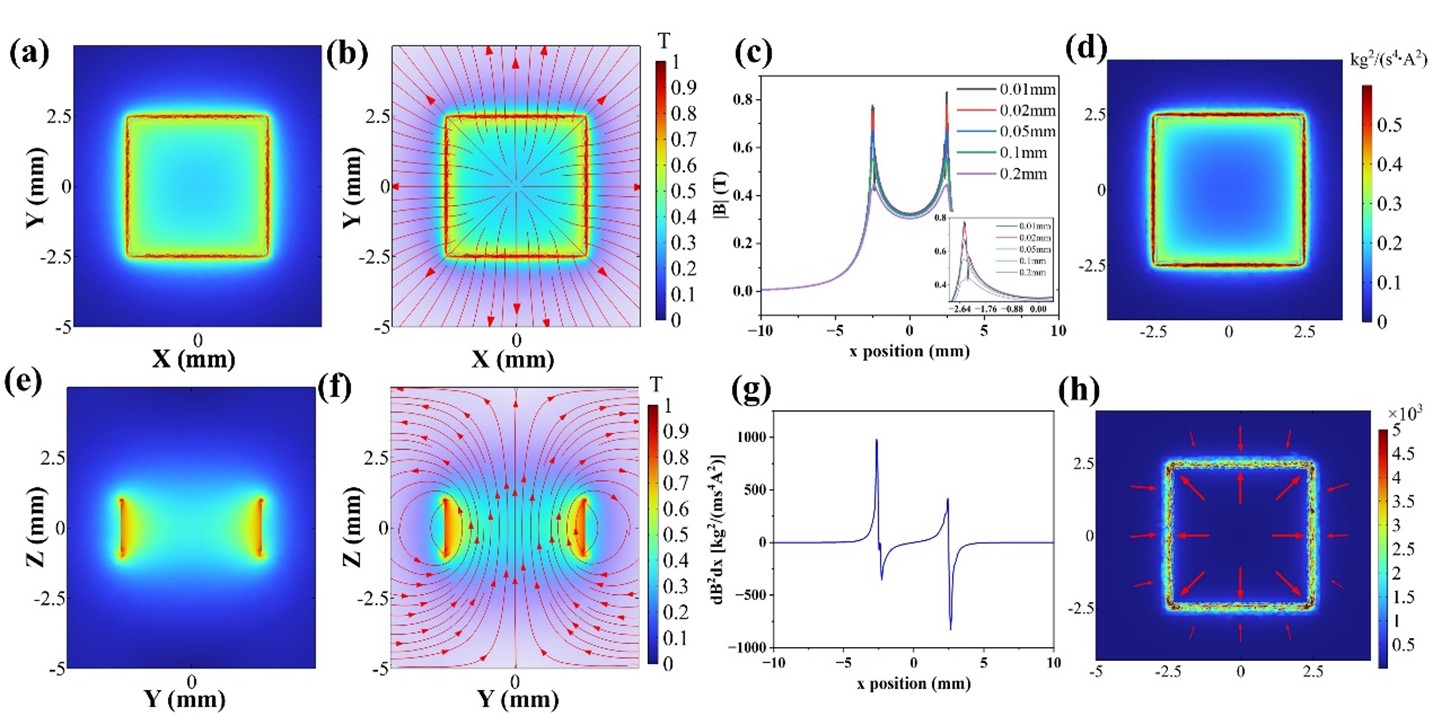
The simulation results show that the magnetic field in the central area of the rectangular magnet sheet is mainly composed of the z-direction component. However, in the edge and corner areas, due to the influence of the limited size boundaries, the magnet
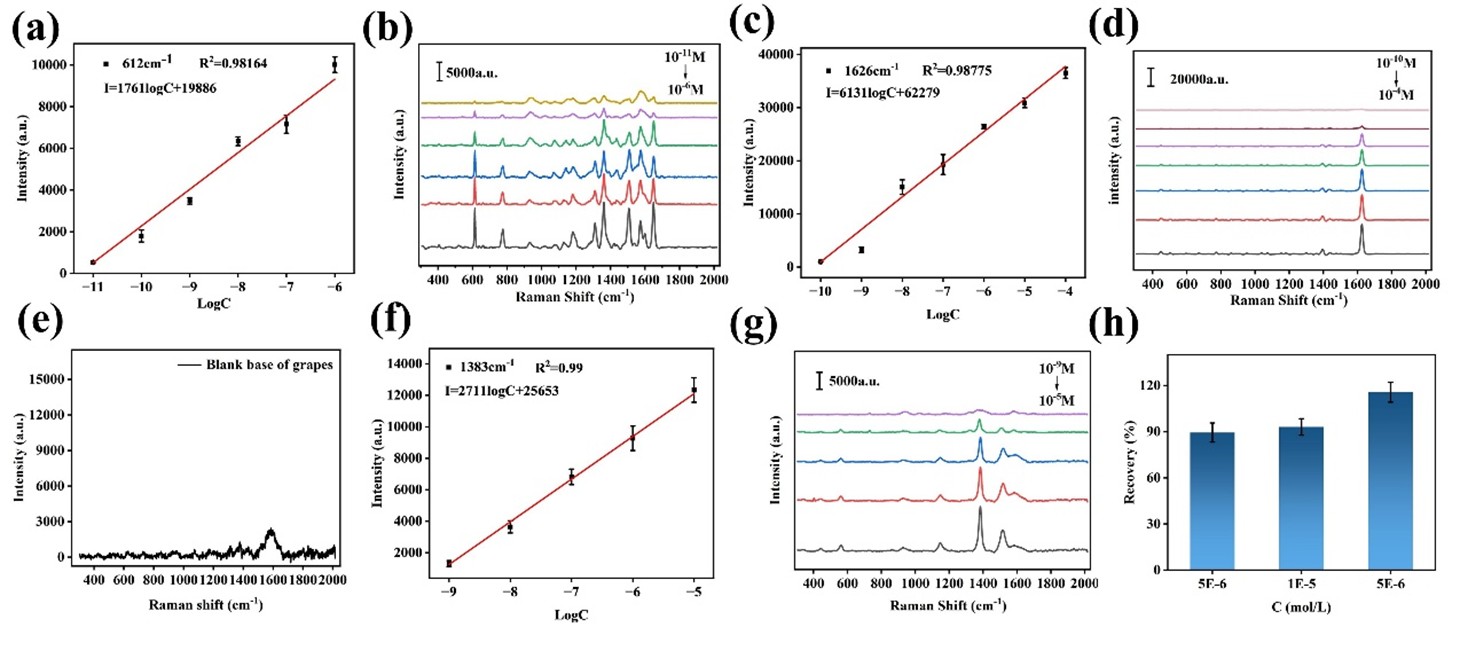
Researchers demonstrate the construction of a NdFeB/PS/Ag composite SERS magnetic substrate, the NdFeB magnet sheets are magnetized.
Researchers develop a reconfigurable SERS detection platform based on NdFeB permanent magnetic substrate to control the self-assembly of magnetic nanoparticles
CHENGDU, SICHUAN, CHINA, September 17, 2026 /EINPresswire.com/ -- The existing magnetic-responsive SERS substrates have difficulty in regulating the spatial coupling between the carrier of the analyte and the plasmonic hotspots, which limits the enhancement effect. This study uses NdFeB/PS/Ag as the plasmonic substrate and the core-shell magnetic nanoparticles (Fe3O4@SiO2@Ag) (FSA) as the molecular capture carrier. By adjusting the magnetization state and magnetic field gradient of the NdFeB sheet, the spatial distribution of FSA particles can be controllably regulated.Research background
Surface-enhanced Raman scattering (SERS) relies on the localized surface plasmon resonance of precious metals to generate strong localized electromagnetic fields, featuring molecular fingerprint identification and ultra-sensitive trace detection capabilities. It is widely used in environmental monitoring, food safety, and biomedical detection. Precious metal nanostructures, such as silver and gold, are the core materials for generating SERS hotspots. Currently, the SERS substrates mainly employ soft magnetic materials and external magnetic field adsorption, which can only achieve passive enrichment and separation of magnetic particles; there is no strategy for actively regulating the spatial distribution of particles through gradient magnetic fields, and it is impossible to match the target molecules with the plasmonic hotspots, making it difficult to maximize the SERS enhancement efficiency. The NdFeB high-performance permanent magnet has both high magnetic permeability and high coercivity, and its surface magnetic field can be flexibly adjusted through magnetization and demagnetization. Polystyrene (PS) microspheres are uniform in size and easy to functionalize, making them suitable for ordered template preparation. Combined with Fe3O4 magnetic beads and silver particles with excellent plasmonic properties, the research idea of constructing a gradient magnetic field-controllable SERS substrate by integrating these elements aims to achieve in-situ separation/enrichment and rapid detection functions.
The team led by Professor Mingli Wang from Yanshan University, China, in collaboration with Zhengzhou University, China, and Universidade de Vigo, Spain, has developed a reconfigurable SERS detection platform based on NdFeB permanent magnetic substrate to control the self-assembly of magnetic nanoparticles. The study was published online in the journal of Opto-Electronic Advances on August 10, 2026.
Highlights of this article
1. Innovative base structure and non-contact magnetic control strategy
Using NdFeB hard magnetic sheets as the magnetic substrate, and combining PS-ordered template + magnetic sputtering silver layer to prepare NdFeB/PS/Ag composite plasmonic substrate;using core-shell magnetic particles Fe3O4@SiO2@Ag (FSA) as the molecular carrier,the spatial distribution of particles can be modified without chemical and regulated without contact by means of magnetization and demagnetization, and the operation is simple.
The traditional magnetic-assisted SERS mainly utilizes an external magnetic field to achieve the overall enrichment and separation of magnetic particles and target molecules. However, how the particles are distributed after reaching the substrate and whether they can form effective nanogaps will still affect the final enhancement effect. This scheme utilizes the tunable and relatively stable magnetization state of the NdFeB substrate to form a spatially differentiated magnetic field. Through the magnetic field gradient, it influences the adsorption, lateral migration, and local assembly of the particles, thereby extending the effect of the magnetic field beyond simple enrichment to the regulation of particle distribution and the spatial differences of SERS hotspots.
2. Gradient magnetic field enables controllable zone-specific SERS signals
The rectangular NdFeB substrate naturally exhibits a distribution feature with a strong edge magnetic field and a weak central magnetic field gradient. By precisely controlling the magnetization intensity (2–140 mT), the enrichment behavior of FSA particles can be accurately regulated: the magnetic field gradient drives the self-assembly of particles, and the dipole interaction between particles enhances the density of hotspots, achieving differentiated Raman signal output in the center and edge regions of the substrate; the R6G Raman signal intensity in the central region is 2.6 times that of the edge region.
The 3D magnetic field distribution of NdFeB magnetic sheets and the electromagnetic field enhancement effect of the nano-assembly structure were analyzed using the finite element method. The intrinsic mechanism of the "central high signal" was explained by combining the dynamics of magnetic swimming force and the local electric field distribution. This provided theoretical support and verification for the experimental observations.
3. Excellent comprehensive SERS detection performance
This composite substrate exhibits excellent comprehensive sensing performance. It can achieve a detection limit of 10-12 M for R6G and methylene blue, with a Raman enhancement factor of 4.71 × 10⁷. The detection sensitivity is outstanding. The intensity of the characteristic peaks and the logarithm of the molecular concentration show a good linear quantitative relationship within a concentration range of 10-11 to 10-6 M. At the same time, the base detection showed excellent uniformity, storage stability and batch preparation repeatability. The relative standard deviation (RSD) of single-point area detection was 8.79%. After being stored in a dark and sealed environment for 27 days, the Raman signal still retained 80.4% of its initial intensity. The RSD of the signal peak intensity of multiple batches of base preparations was 2.94%. This system can be adapted for the detection of complex actual samples. It has completed the quantitative analysis of the pesticide fumadiazin in grapes, and the results of spiked recovery are satisfactory. This work proposes a new mechanism for the synergistic enhancement of magnetism-particles-plasmons:The magnetic field gradient drives the FSA magnetic particles to be orderly and controllably dispersed on the substrate surface, significantly increasing the contact area between the particles and between the particles and the silver film interface. By superimposing the dual plasmon coupling effect of the PS/Ag- ordered array and the FSA outer silver shell, a 3D high-density SERS hotspot is constructed and the Raman response signal is significantly amplified. This provides a new design strategy for constructing a dynamic reconfigurable SERS sensing platform.
Research significance and prospects
This study utilized hard magnetic gradient fields to regulate the self-assembly of magnetic nanoparticles, constructing a theoretical model for the magnetic field distribution of a rectangular permanent magnet substrate and the magnetic propulsion force of magnetic particles. This enriched and improved the theoretical framework for magnetic response SERS substrates, providing a more comprehensive understanding of magnetic field control in this context. Additionally, it innovatively proposed a "magnetic field-magnetic particles-noble metal plasmon" tripartite synergistic SERS enhancement mechanism, elucidating the intrinsic relationship between the spatial arrangement of nanoparticles, the density of plasmon hotspots, and the Raman signal intensity. This laid a theoretical foundation for the structural design of dynamic reconfigurable SERS sensor devices. This sensing platform has a wide range of applicable detection capabilities and can rapidly screen for various trace substances such as organic pollutants in water environments, pesticide residues in food, and biological markers. It achieves adjustable signals through permanent magnet charging and demagnetization, and does not require complex external magnetic field devices, making it convenient for the development of portable on-site rapid detection equipment.
***
Reference
Title of original paper: Reconfigurable SERS platform based on magnetization-controlled self-assembly of magnetic nanoparticles on NdFeB composite substrate
Journal: Opto-Electronic Advances
DOI: 10.29026/oea.2026.260135
Research team profile
Dr. Mingli Wang, Professor and Doctoral Supervisor, is currently the Dean of the School of Science at Yanshan University, China, the vice-chairman of the Hebei Province Physical Society, and the standing director of the Hebei Province Optical Society. He serves as a member of the editorial boards of "Optoelectronic Engineering" and "Journal of Light Scattering," and his research focuses on surface interface-enhanced spectroscopy. He has undertaken seven projects funded by provincial-level or higher-level natural science funds. As the first author or corresponding author, he has published over 100 SCI-indexed papers in academic journals such as Opto-Electronic Advances, Laser & Photonics Reviews, Chemical Engineering Journal, and Food Chemistry. Among them, there are 10 highly cited papers in the ESI category, and the total citations of these papers amount to 2,080 times (Google Scholar), the H factor is 28. He has served as a reviewer for over 40 journals such as Laser & Photonics Reviews, Trends in Analytical Chemistry, and Analytical Chemistry.
Dr. Guangchao Zheng, an Associate Professor at the Physics Institute of Zhengzhou University, China, and a Young Talent of Henan Province, obtained his doctoral degree from the University of Vigo in Spain, under the guidance of renowned expert in the field of nanotechnology, Professor Luis M. Liz-marzan. Postdoctoral research was conducted at The Hong Kong Polytechnic University from 2016 to 2019. Employment at the College of Physics, Zhengzhou University has continued since 2019. The first author's work was published in over 30 papers, including those in Chemical Society Reviews, Advanced Materials, Angewandte Chemie International Edition (3), Progress in Materials Science, ACS Nano (2), Advanced Functional Materials, Advanced Science (3), ACS Catalysis, Nano Research (3), Small (4), Advanced Optical Materials (2), etc. He has served as a young editorial board member for journals such as Rare Metals, Microstructures, and Exploration. The research focuses mainly on precise synthesis, surface-enhanced Raman scattering, chiral nanophotonics, photocatalysis, optical sensors, etc. He has led one General Program project and one Young Fund project of the National Natural Science Foundation of China as principal investigator. He has received the 2024 RSC-JMCC Emerging Investigator 2026 RSC-JMCA emerging investigators, etc. He has served as an independent reviewer for over 40 different journals including Science, Advanced Materials, Advanced Functional Materials, ACS Nano, Nano Letters, Coordination Chemistry Reviews, and Opto-electronic Advances.
Siyi Ma
Institute of Optics and Electronics, CAS
+86 19136186296
oej_publishing@ioe.ac.cn
Legal Disclaimer:
EIN Presswire provides this news content "as is" without warranty of any kind. We do not accept any responsibility or liability for the accuracy, content, images, videos, licenses, completeness, legality, or reliability of the information contained in this article. If you have any complaints or copyright issues related to this article, kindly contact the author above.
